Executive Summary
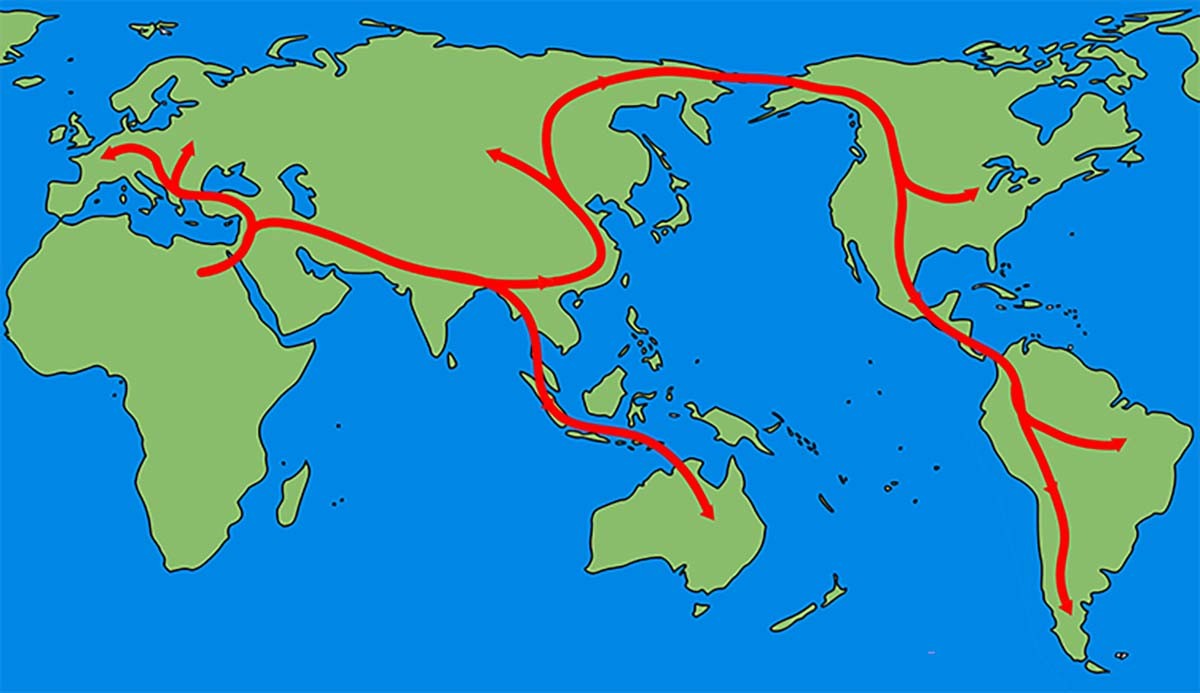
Since modern times (c. 1500 CE), great migrations have profoundly reshaped global demographics, driven by European exploration and colonization, economic opportunities, war and conflict, and increasingly, climate and environmental changes. These movements led to the near-total population replacement in regions like the Americas and Oceania by immigrant descendants, while Eurasia and Africa largely retained indigenous populations, though significantly impacted by emigration and internal shifts.
The legacy of these migrations is evident in contemporary economic development, cultural diversity, and persistent inequalities. Research by Putterman and Weil demonstrates that the ancestral origins of a country's population are significant predictors of its economic outcomes today, with 44% of the variance in year 2000 per capita GDP explained by the share of ancestors living in Europe in 1500.
This comprehensive analysis examines the scale, drivers, and lasting impacts of these transformative population movements that continue to shape our world today.
1. Core Explanation: Major Population Movements and Driving Factors
1.1 Defining "Modern Times" in the Context of Migration
In the context of global migration, "modern times" is generally considered to begin around 1500 CE. This period marks a significant turning point in human history, characterized by the onset of European global exploration, the establishment of transoceanic trade routes, and the beginnings of widespread colonization.
The year 1492, with Christopher Columbus's first voyage to the Americas, is often cited as a symbolic starting point for this era, as it initiated sustained contact and interaction between the Eastern and Western Hemispheres, leading to unprecedented population movements, cultural exchanges, and ecological transformations known as the Columbian Exchange.
Key Distinction:
This era is distinguished from earlier periods by the scale, reach, and impact of migration, which became increasingly global in nature, driven by new maritime technologies, imperial ambitions, and the integration of disparate world regions into a nascent global system.
1.2 Overview of Global Migration Patterns (1500 CE - Present)
The period since approximately 1500 CE has witnessed a significant acceleration in the pace and scale of human migration across the globe, largely driven by European exploration, colonization, and the Atlantic Slave Trade [1] [2].
Age of Exploration (15th-17th centuries)
European colonial expansion into the Americas, Africa, Asia, and Oceania. In the 16th century alone, an estimated 240,000 Europeans migrated to American ports.
Industrialization Era (18th-19th centuries)
Over 50 million Europeans left for the Americas in the 19th century. Industrialization spurred urbanization and labor mobility worldwide.
The research by economists Louis Putterman and David N. Weil, who constructed a "World Migration Matrix," provides a quantitative lens through which to examine these demographic shifts from 1500 CE to the present [8] [9].
Ancestral Continuity by World Region (c. 2000, relative to 1500 CE origins)
| Region | % Ancestral Continuity | Key Observations |
|---|---|---|
| United States, Canada, Australia, NZ | 3% | Near-total population replacement due to European colonization |
| Caribbean | 0% | Total replacement of indigenous population |
| South America | 20% | Lower indigenous ancestry, significant European/African influence |
| Mexico and Central America | 65% | Higher indigenous continuity with substantial post-1500 admixture |
| North Africa and West/Central Asia | 89% | Predominantly indigenous descendant populations |
| Europe | 94% | High ancestral continuity with significant intra-European migration |
| Southeast, South, East Asia | 94-98% | Very high ancestral continuity |
1.3 Key Driving Factors
The decision to migrate is rarely attributable to a single cause; rather, it is typically the result of a complex interplay of "push" and "pull" factors. These can be broadly categorized into economic, social, political, and environmental drivers [13].
Exploration and Colonization
The Age of Exploration (15th-17th centuries) and subsequent European colonialism were primary catalysts for large-scale population movements [1] [3].
Economic Opportunities
Economic factors have consistently been a dominant driver, encompassing both voluntary movements and forced labor migrations [1] [19].
2. Regional Analysis of Great Migrations
2.1 The Americas: European Colonization and the Columbian Exchange
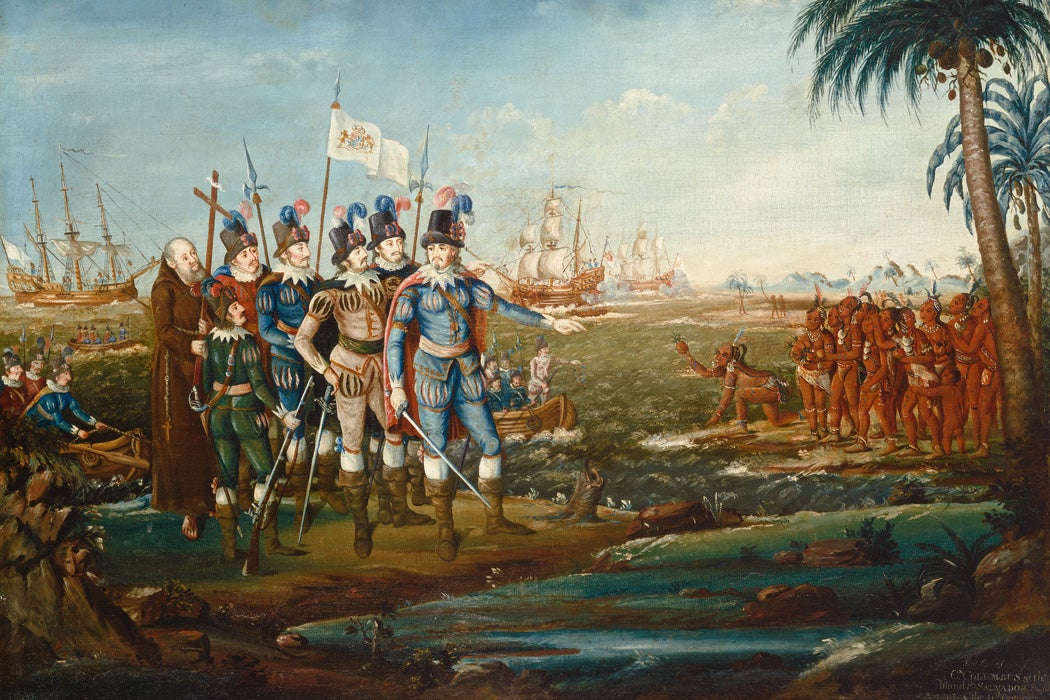
The arrival of European colonizers in the Americas after 1492 initiated a profound demographic and ecological transformation, largely driven by the Columbian Exchange—the widespread transfer of plants, animals, culture, human populations, technology, diseases, and ideas between the Americas, West Africa, and the Old World.
Impact on Indigenous Populations
Catastrophic demographic collapse due to introduced diseases, warfare, and displacement. Only 3% of US/Canada population in 2000 had ancestors in the region in 1500.
Transatlantic Slave Trade
12-15 million Africans forcibly transported to the Americas between 16th-19th centuries, fundamentally reshaping demographic landscapes.
European Settlement
Massive waves of European immigration, particularly in the 19th century, with over 50 million Europeans migrating to the Americas.
2.2 Africa: External Influences and Internal Dynamics
Africa's migration history since 1500 CE has been profoundly shaped by external forces, most notably the transatlantic slave trade and European colonialism, as well as by complex internal dynamics including pre-existing trade networks and environmental factors.
Devastating Impact:
The forced removal of an estimated 12-15 million able-bodied men and women had severe consequences for African societies, leading to population decline, disrupted social structures, and cycles of violence.
European colonialism in Africa, particularly during the "Scramble for Africa," imposed artificial borders that often divided ethnic groups and united rival communities, creating a legacy of political instability that continues to affect migration patterns today.
2.3 Asia: Diverse Patterns of Movement
Asia, the world's largest and most populous continent, has experienced a wide array of migration patterns since 1500 CE, including movements driven by European colonial expansion, extensive trade diasporas, and significant conflict-induced displacements.
Labor migration has been a major feature, with millions of Indians and Chinese migrating as indentured laborers during the colonial era, creating substantial diaspora communities that have significantly influenced host countries.
2.4 Europe: Emigration, Immigration, and Internal Shifts
Europe has been a central player in global migration since 1500 CE, acting as a major source of emigrants to other continents, a destination for immigrants, and a region characterized by significant internal population shifts.
Mass Emigration (19th-20th centuries)
Between 1836-1914, over 30 million Europeans migrated to the United States alone, driven by population growth, agricultural crises, and political unrest.
Recent Immigration Trends
Europe has transitioned to net immigration, hosting 87 million international migrants (30.9% of global total) in 2020, driven by post-colonial ties and refugee flows.
2.5 Oceania: Settlement and Colonization
Oceania experienced significant demographic transformation following European contact, primarily through settlement and colonization, which had profound impacts on indigenous populations.
Demographic Impact:
Only about 3% of the current populations of Australia and New Zealand have ancestors who resided in those territories in 1500 CE, highlighting the scale of demographic shift caused by European colonization.
3. Visualizing Population Movements
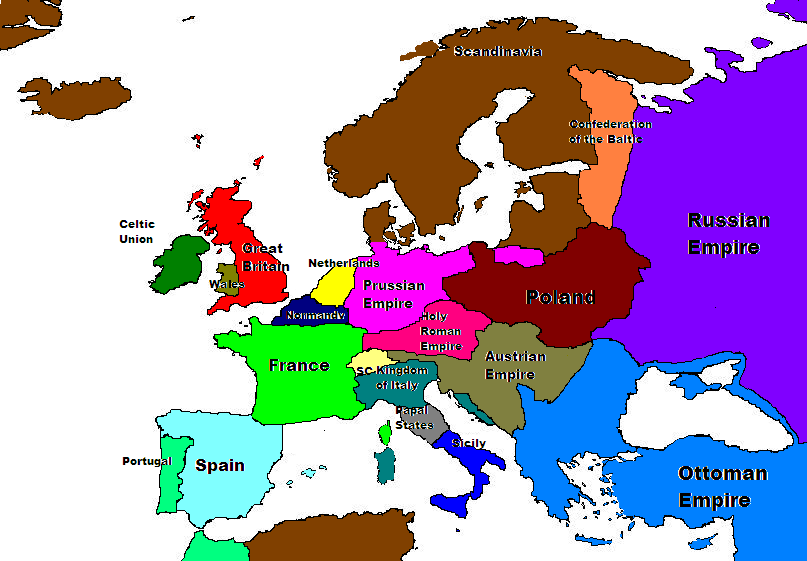
Creating a single, comprehensive historical map that accurately illustrates all major human migration flows since 1500 CE presents significant challenges. The sheer volume, diversity, and temporal span of these movements make it difficult to capture all nuances on a single static map.
European Colonization Map (1500-1960)
This map visualizes the geographical scope of European colonial endeavors, which were intrinsically linked to massive population movements including European settlement and forced African migration.
Transatlantic Slave Trade Routes
Detailed maps show the trafficking of enslaved Africans from 1514-1866, based on over 36,000 transatlantic and 10,000 intra-American human trafficking routes.
While a single all-encompassing map is elusive, combining various visual resources focusing on specific migrations or time periods provides a more comprehensive understanding of global migration patterns since 1500 CE.
4. Long-Term Impacts of Modern Era Migrations
The great migrations since 1500 CE have left an indelible mark on the world, reshaping demographics, cultures, economies, and political structures in profound and lasting ways.
Demographic Reshaping
The most direct impact has been the dramatic demographic reshaping of entire continents, with the Americas and Oceania experiencing near-total population replacement or significant admixture.
Cultural Exchange
The movement of large numbers of people facilitated unprecedented cultural exchange and syncretism, leading to new hybrid cultural forms in music, religion, cuisine, and language.
Economic Development and Inequality
Research by Louis Putterman and David N. Weil demonstrates that the ancestral origins of a country's population are significant predictors of its contemporary economic outcomes [11] [8].
Ancestral Origins and Economic Outcomes
Of variance in 2000 per capita GDP explained by share of ancestors in Europe in 1500
Ancestral continuity in Southeast/East Asia correlates with high development
Indigenous ancestry in settler colonies despite high GDP per capita
Political and Social Structures
European colonization led to the imposition of new political systems and administrative boundaries, often disregarding existing indigenous structures and creating artificial states that later faced challenges of national cohesion.
Colonial Legacy
The legacy of colonial-era divisions based on ethnicity or religion has contributed to persistent conflicts and political instability in many post-colonial nations.
The transatlantic slave trade established deeply entrenched systems of racial hierarchy and social inequality, the effects of which are still evident today.
5. Conclusion: Understanding the Legacy of Modern Migrations
The great migrations since 1500 CE represent a pivotal chapter in human history, fundamentally altering the demographic, cultural, economic, and political contours of the globe. Driven by a complex interplay of exploration, economic ambition, conflict, and environmental pressures, these movements have connected distant parts of the world in unprecedented ways.
Key Takeaways
- Demographic Transformation: Near-total population replacement in the Americas and Oceania, with 97% of current populations descended from post-1500 immigrants.
- Economic Legacy: Ancestral origins from 1500 CE explain 44% of the variance in current GDP per capita across countries.
- Cultural Syncretism: Unprecedented cultural exchange creating new hybrid forms while often suppressing indigenous cultures.
- Contemporary Relevance: Migration continues to shape global challenges including inequality, conflict, and climate displacement.
Understanding the legacy of modern migrations is crucial for comprehending the roots of many contemporary global challenges, including inequality, ethnic conflict, refugee crises, and debates over multiculturalism and national identity. It also provides historical context for ongoing migration trends, reminding us that human mobility has been a constant force in shaping our world.
Recognizing this legacy is essential for fostering a more informed and empathetic approach to the complex issues surrounding migration in the 21st century.
Comments
Post a Comment
Thank you for your comment! We appreciate your thoughts. Please keep your comments respectful and relevant to the topic. Enjoy your time on our blog!